
Resources

Onsite Water Systems build upon years of research and collaboration by leading water utilities, public health officials, and national research foundations. The materials below include resources to support local implementation of onsite non-potable water reuse programs. Check back for updates and publications from the commission.
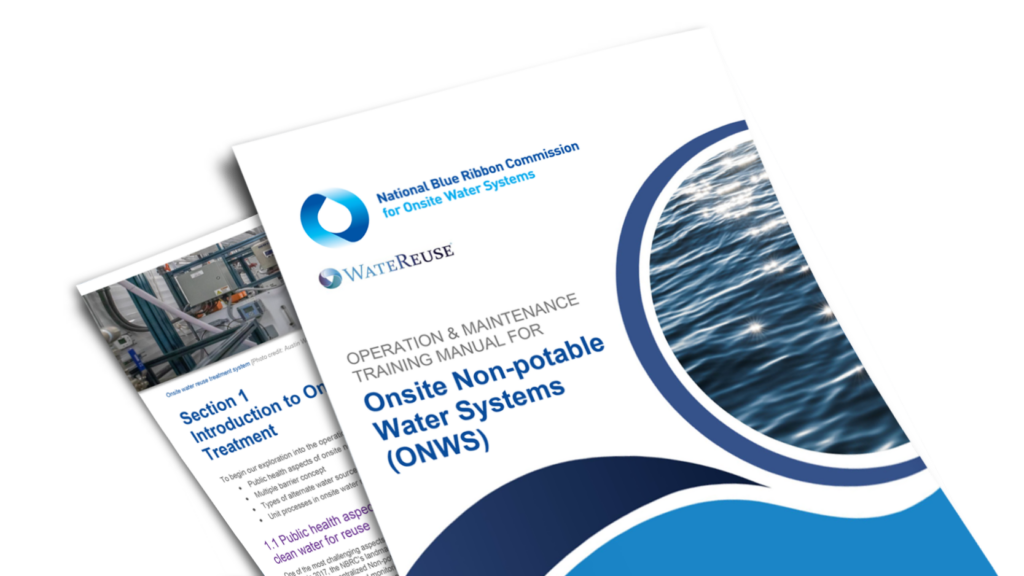
Onsite Operation and Maintenance Manual
The Operation and Maintenance Training Manual for Onsite Non-potable Water Systems, published in 2026, provides education on managing multifamily, commercial, mixed-use, and district-scale onsite water systems. The manual was pioneered by the National Blue-Ribbon Commission for Onsite Water Systems and WaterReuse with support from Austin Water, San Francisco Public Utilities Commission, and Epic CleanTec.
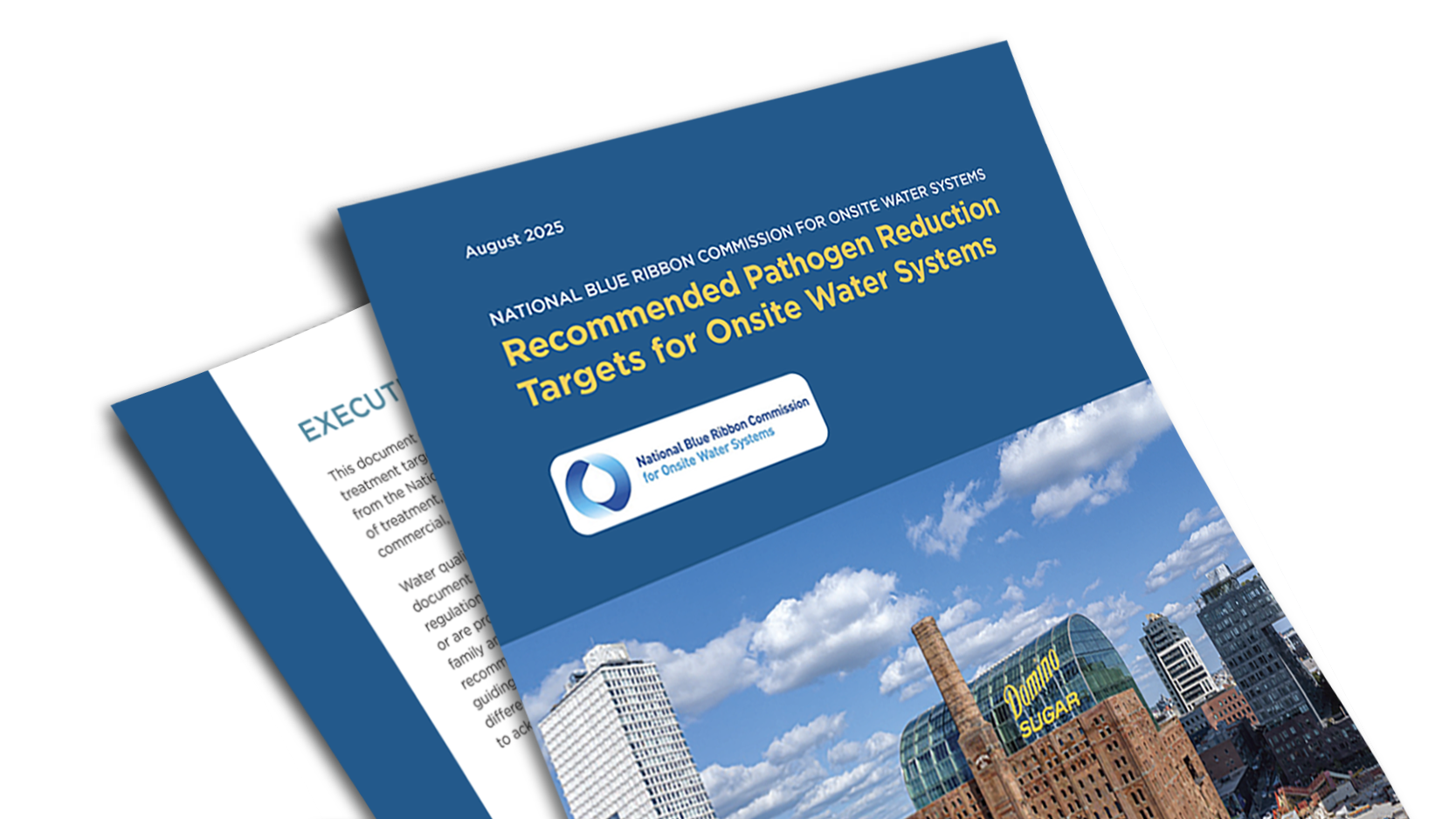
Recommended Pathogen Reduction Targets
This 2025 report outlines the current state of the science on risk-based treatment targets for onsite water systems and provides guidance to determine the level of treatment, oversight and management for commercial, multi-family and mixed-use buildings for non-potable end uses.
National Blue Ribbon Commission Fact Sheet
A fact sheet discussing the role and activities of the national Blue Ribbon Commission (NBRC) for Onsite Non-potable water systems, relevant regulations across the United States, and more.
2024 NBRC Action Plan
Developed by the NBRC, this document contains a set of 10 goals to accelerate the adoption of Onsite Water Systems in our communities.

Risk-Based Framework for Developing Microbial Treatment Targets for Water Reuse
This 2025 U.S. EPA framework outlines the quantitative microbial risk assessment (QMRA) and demonstrates how to use the model, as well as the parameters to input into the model. EPA has characterized risks to public health for potable, irrigation, and non-potable water reuse.
Technical Resources
Program Guidance
- Program Guide: Financing Decentralized Wastewater Treatment Systems
- Onsite Water Recycling E-Book (2022)
- Onsite-Non Potable Water Systems Guidance Manual
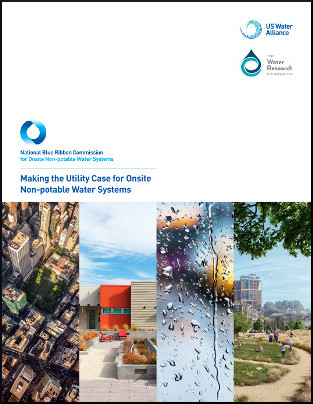
- Making the Utility Case for Onsite Non-potable Water Systems
- Blueprint for Onsite Water Systems: A Step-by-Step Guide for Developing a Local Program to Manage Onsite Water Systems
- Assessing the Microbial Risks and Impacts from Stormwater Capture and Use to Establish Appropriate Best Management Practices (WRF 5034)
- Institutional Complexity: Navigating Diverse Perspectives in the Adoption of On-site Water Reuse
- Conceptualizing Equity for Onsite Non-Potable Water Reuse Systems in the U.S.
- Characterizing Non-Technical Barriers for Onsite Alternative Water Systems
Public Health Guidance
- Health Risk-based Benchmarks for Onsite Treatment of Water
- SFPUC Report: Independent Advisory Panel for Single-Family Water Reuse Applications
- Risk-Based Framework for the Development of Public Health Guidance for Decentralized Non-Potable Water Systems
- Public health standards overview
- Public Health standards factsheet
Tools for Developing Regulations, Ordinances, and Rules
- A Guidebook for Developing and Implementing Regulations for Onsite Non-potable Water Systems
- Model State Regulation for Onsite Non-potable Water Programs
- Model Local Ordinance for Onsite Non-potable Water Programs
- Model Program Rules for Onsite Non-potable Water Programs
- Technical Appendix: A Guidebook for Developing and Implementing Regulations for ONWS
Modeling Tools
Regulations, Guidelines, and Legislation

- California: In September 2018, California signed into law Senate Bill 966, which directs the State Water Resources Control Board to establish risk-based water quality standards for onsite non-potable water systems. The SFPUC collaborated with Senator Scott Wiener to develop the legislation. The work that’s been accomplished to date by the National Blue Ribbon Commission will support the state’s development of the risk-based water quality standards.
- San Francisco Department of Public Health: Rule and Regulations for Alternative Water Source Systems
- Colorado: In August 2018, Colorado Department of Public Health and Environment updated Regulation #84, which regulates reclaimed water use, to allow localized nonpotable water systems to treat onsite wastewater for toilet flushing and irrigation. Colorado adopted a risk-based water quality approach for localized water reuse systems.
- Hawaii: Hawaii passed legislation House Bill 444 in 2019 directing the Hawaii Department of Health to adopt a localized set of rules for onsite non-potable water systems with guidance from the National Blue Ribbon Commission.
- Minnesota: Minnesota Department of Public Health has moved forward with guidance for onsite non-potable water systems. A report was published in March 2018 Advancing Safe and Sustainable Water Reuse in Minnesota. Recommendations from Minnesota’s report include adopting the risk-based water quality approach.
- Washington: In 2021, House Bill 1184 was passed and signed into law. The legislation directs the Washington Department of Health to develop state-wide risk-based water quality standards for the use of onsite non-potable water reuse systems in commercial and multi-family buildings
Local, State, and Federal Programs
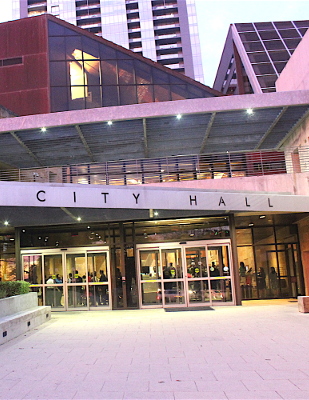
- Austin Water: Onsite Water Reuse System
- National Water Reuse Action Plan: Action 3.4 Develop Research and Tools to Support Onsite Non-Potable Water Reuse Systems
- New York City Department of Environmental Protection: Water Conservation & Reuse Grants
- New York City Department of Health: Nonpotable Water Systems Guidance Manual
- Colorado Department of Public Health & Environment: On-site wastewater treatment systems
- San Francisco Public Utilities Commission: Non-potable Water Program
- National Water Reuse Action Plan: Action 2.18 Incorporate Onsite Reuse Research into Codes and Standards for Premise Plumbing
Publications and Presentations

- Onsite Water Reuse Summit: Integration of Science, Policy, and Operation for Safe and Effective Implementation, April 2024
- Waterloop Podcast, April 2024: San Francisco’s Onsite Revolution
- Onsite Water Reuse Lessons Learned – SFPUC, 2024
- Microbial Treatment Targets for Potable and Nonpotable Water Reuse – A Comprehensive Update and Harmonization, Jahne et al 2024
- White Paper on Mainstreaming Decentralized Urban Water Management Solutions for Sustainable Cities, Author Team: Eawag, UC Berkeley and BlueTech Research
- Resilience through Collaboration: First Year Highlights and Future Directions of the National Water Reuse Action Plan, Former NBRC Chair Paula Kehoe discusses onsite non-potable reuse priorities during EPA and WateReuse National Water Reuse Action Plan webcast, 2021.
- WateReuse webcast: Breaking Down Implementation Barriers for Onsite Non-Potable Water Systems, 2020.
- WateReuse webcast: Advancing Onsite Water Reuse and Lessons Learned
- Case Studies of San Francisco Non-potable Water Projects
- Case Studies of Innovative Water Reuse and Resource Recovery Projects
- Case Studies of Water Recycling Projects Around the World
- WRF 5040: Successful Implementation of Decentralized Reuse and Treatment Systems